

How to Get Out of Holiday Mode: A September Reset with 3 Work Habits That Actually Help
Find your September reset with three simple work habits to help you get out of holiday mode, refocus after the summer break and make meaningful progress at work.

How can I bounce back from rejection when applying for jobs?
Learn how to cope with job rejection using a simple coaching exercise. Build confidence, manage self-doubt and make better career decisions during your job search.
Big decisions aren't usually the beginning of transformation
Why do some life and career decisions feel impossible, even when you know something needs to change? This article explores why lasting transformation isn't about finding the courage to make one big decision overnight. Drawing on coaching insights and William Bridges' Transition Model, it explains how the most significant changes begin long before any visible action is taken. Discover why the uncomfortable "middle ground" is often where the real work happens, how hidden fears and beliefs can keep you stuck, and why building confidence through small changes creates the momentum for lasting transformation. Whether you're considering a career change, navigating burnout, or simply feeling ready for a different chapter, you'll learn why big decisions are often the result of transformation, not the beginning of it.
How to Improve Difficult Relationships at Work Using the Trust Equation
Struggling with a difficult relationship at work? Whether it's your boss, a colleague or a direct report, discover how the Trust Equation can help you build stronger workplace relationships, improve communication, increase trust and reduce conflict. Learn a simple coaching tool that's helping leaders create healthier, more effective working relationships.

What Is Positive Psychology? And how it's PERMAH model can help you live a better life
Discover how positive psychology and the PERMAH model can help you flourish at work and in life. In this article, transformational coach Liv Cropper explores the science behind wellbeing, why so many high achievers find themselves merely 'languishing', and how the evidence-based PERMAH framework can support lasting personal and professional growth. You'll learn the six key elements of flourishing, along with practical reflection questions to help you identify where to focus your energy and create meaningful, sustainable change.

How can I work out what my next career step should be? I’m uncertain and confused about my work
When you’re feeling unsure and confused about your next career step, it can be hard to know what to do next. But being in a period like this is a normal and common part of human existence and there are lessons you can take from others who’ve successfully navigated this time of ‘fogginess’. By embracing this time as a period of exploration and experimentation, and focusing on just taking simple steps towards the direction that feels right for you, you can step your way through the fog and into your next chapter.
What's the Best Way to Develop Gravitas and Build Executive Presence?
When building a development plan that will help you get to the next level of leadership, it's common to focus on things like gravitas, credibility and executive presence.
Perhaps you've received feedback that you need to be more influential or strategic at senior levels. Perhaps you're aiming for a promotion, stepping into a bigger leadership role, or simply looking at the qualities that distinguish those operating at executive level.
You may already be researching training courses that promise to help you develop these skills.
In this article, I'm going to make a slightly controversial argument: an executive presence course may not give you the results you’re hoping for if you haven't first invested in developing four things that sit underneath it all: self-awareness, self-regulation, self-belief and self-trust.
Do I really need a coach?
Do I really need a coach? This might be a question you’re mulling over right now. And as so often is the case, there’s a short answer - no, and a longer answer - maybe. So many clients I work with don’t really need me because they actually already have a coach, who is right there with them all the time - their inner coach. Now, we don’t always give that inner coach the time and space to do their best work, and they can often be drowned out by other voices - inner doubt, and our inner critic. And it’s here that an “in real life” coach can help to strengthen that inner voice of wisdom and support.

The essential sustainability leadership skills we never talk about
It’s well accepted that a sustainability leader needs to be resilient to withstand the challenges of their role. But the concept of resilience has been twisted beyond it’s original meaning. It’s become a shorthand for coping with stressful events without drama. And we’re not talking about the deeper skills of self-awareness and self-regulation that lead to true resilience and give us the ability to make the potential impact we’re capable of.

Do I need to make big changes in order to transform my life? (no, you need to think big, and act small)
I’m often asked a question along these lines when I talk to people about transformational coaching. Transformation is a big word, and it conjures up visions of big changes. In my work helping sustainability leaders to transform their careers, I often speak to people who hope to transform their lives through a career pivot - perhaps leaving corporate, changing industry, or going freelance. And it’s certainly true that all these things will have the effect of transforming the circumstances of your life. What is less clear though is whether they’ll transform your life for the better. For that, you need to think even bigger, and counter-intuitively, act smaller.

Have you been setting new boundaries? That’s great, but there’s something you need to know.
Have you been setting new boundaries? That’s great, but there’s something you need to know. You need to be aware of overshooting your new boundaries.
Firstly, well done. It’s not always easy to implement new rules which protect your time, energy and peace. When we do the difficult work of deepening self-awareness and building self-belief, we uncover patterns and behaviours that may have served us well in the past, but now drain us. Noticing when these patterns or behaviours are playing out is the first step. The next challenge is to intervene, to pause and avoid those instinctive responses from kicking in. And then we might make a promise to ourselves, or set a boundary, to give us a new playbook to guide our responses. Setting boundaries can feel good, and it can free up precious time and energy. But it can also feel uncomfortable too - this is the ‘messy middle’. And sometimes we can overshoot our boundary - going too far and creating unintended consequences - a sort of ‘push me, pull me’ kind of effect.
How can I find my purpose again as a sustainability leader?
When you work in the sustainability profession, it is usually very easy to describe a clear mission and purpose that drives your career. But many of the leaders I work with have found themselves in senior leadership roles feeling actually quite disconnected from what really fires them up. Why, when the issues you are working on are so obvious and urgent, can you sometimes lose your ‘mojo’, and how can you find it again? In this article I’ll share with you the Japanese concept of Ikigai, which I use in my coaching room to help sustainability leaders work on their mission and purpose at a much deeper, and more personal level.
How you can transform your career by being more aware of your energy consumption
Taking better care of your energy isn’t just about sleeping well, recharging the batteries on the weekend, and going for a run. For deep transformation, you’ve got to really tackle the way you spend your energy when you’re at work. I’ve been using the GC Index profiling tool with clients and we’ve been exploring what work naturally energises and depletes them, and considering what implications this has for the work they do and the way they spend their days. I’m challenging my clients to consider their energy consumption on a much deeper level.
I’ve just been made redundant. How can a coach help me navigate redundancy and get my next job?
From grappling with the emotional fallout of redundancy, gaining clarity on your next career move and stepping into the authentic self-belief needed to apply and interview for roles, working with a coach can be enormously valuable at what can often be a very difficult time. A good coach will work with you on a number of levels - from the deep to the practical, and can offer insights into the strategies and tactics that are working well in today’s job market.
What coaching methods get the best results for sustainability leaders?
In my experience of coaching sustainability leaders to transform their lives and careers, these four elements create the most successful coaching outcomes for sustainability leaders: working holistically across your past, present & future; using therapeutic tools to take the sting out of significant events; working deeply to reconnect with your values and purpose; and creating a practical, future focused plan.

What is my body trying to tell me about my work?
Sometimes our lives can become so busy, so full on, that we can become really disconnected from our own bodies. But if we can learn to tune in more closely, and pay attention to what our bodies are telling us, we can get the clues we need to transform our lives. In this article I’ll share what’s helped me, and what helps my clients to tune into what their bodies are telling them.

How can I navigate a career crossroads or transition? A guide to help sustainability leaders find clarity
If you’re confused about your next step in your sustainability leadership career, then this article is for you. I’ll distil the wisdom I gained from my own 25-year career in corporate leadership, as well as the steps I help my one-to-one coaching clients navigate. We’ll talk about your strengths, leaning into curiosity and exploration, and taking the time to consider what’s really holding you back.

How can I get more out of LinkedIn? A guide for sustainability leaders
Most of my clients are sustainability leaders working through a time of career transition. Often they are looking for their next role, or considering a move into freelance, consultancy or portfolio work. What many of these leaders have in common is that they are on LinkedIn, they use it a little bit, they feel they ‘should’ use it more, but don’t feel remotely enthusiastic by the prospect (I get it, that was me a couple of years ago). In this article, I’ll share with you the simple steps I walk my clients through to help them better leverage LinkedIn without becoming a slave to complicated and time consuming systems.
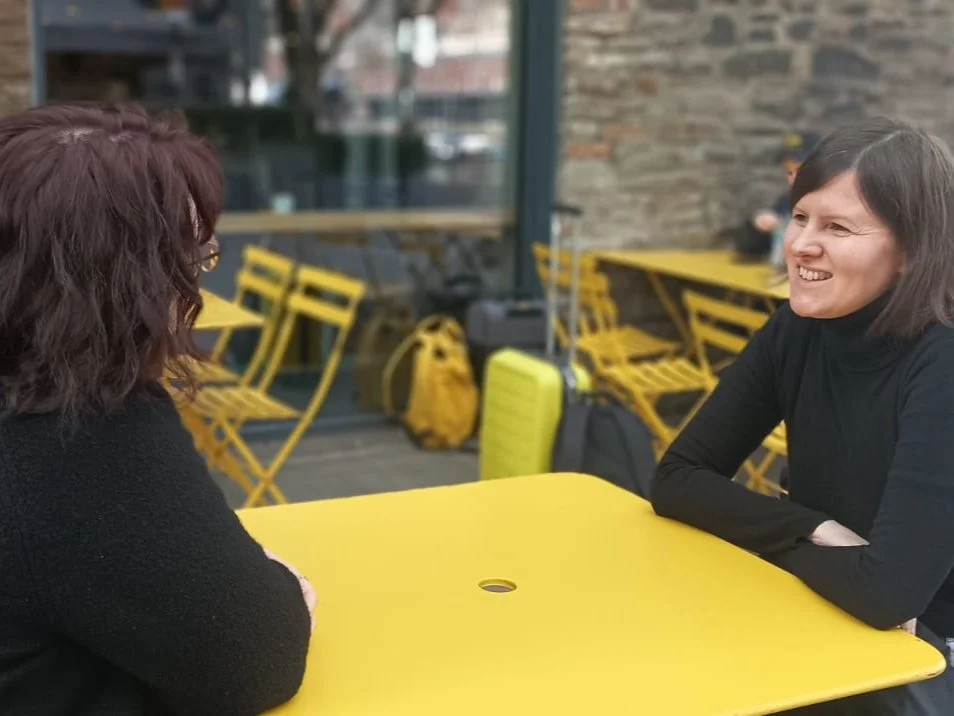
How much does coaching cost?
If you’re thinking of investing in executive, leadership, career or transformational coaching, you’ll want to understand the costs involved before you make a decision. I’ve written this article to give you some more information about what coaching costs and the various factors which will affect the price you pay.

Six tips to help you prepare for your next sustainability leadership role
I work every day with sustainability leaders, coaching and helping them through big career transitions. In this article I’ll share with you the advice I give them that helps them get ready to land their next big sustainability leadership role.